Escaping WordPress and Elementor: From 69 to 99 PageSpeed with Astro

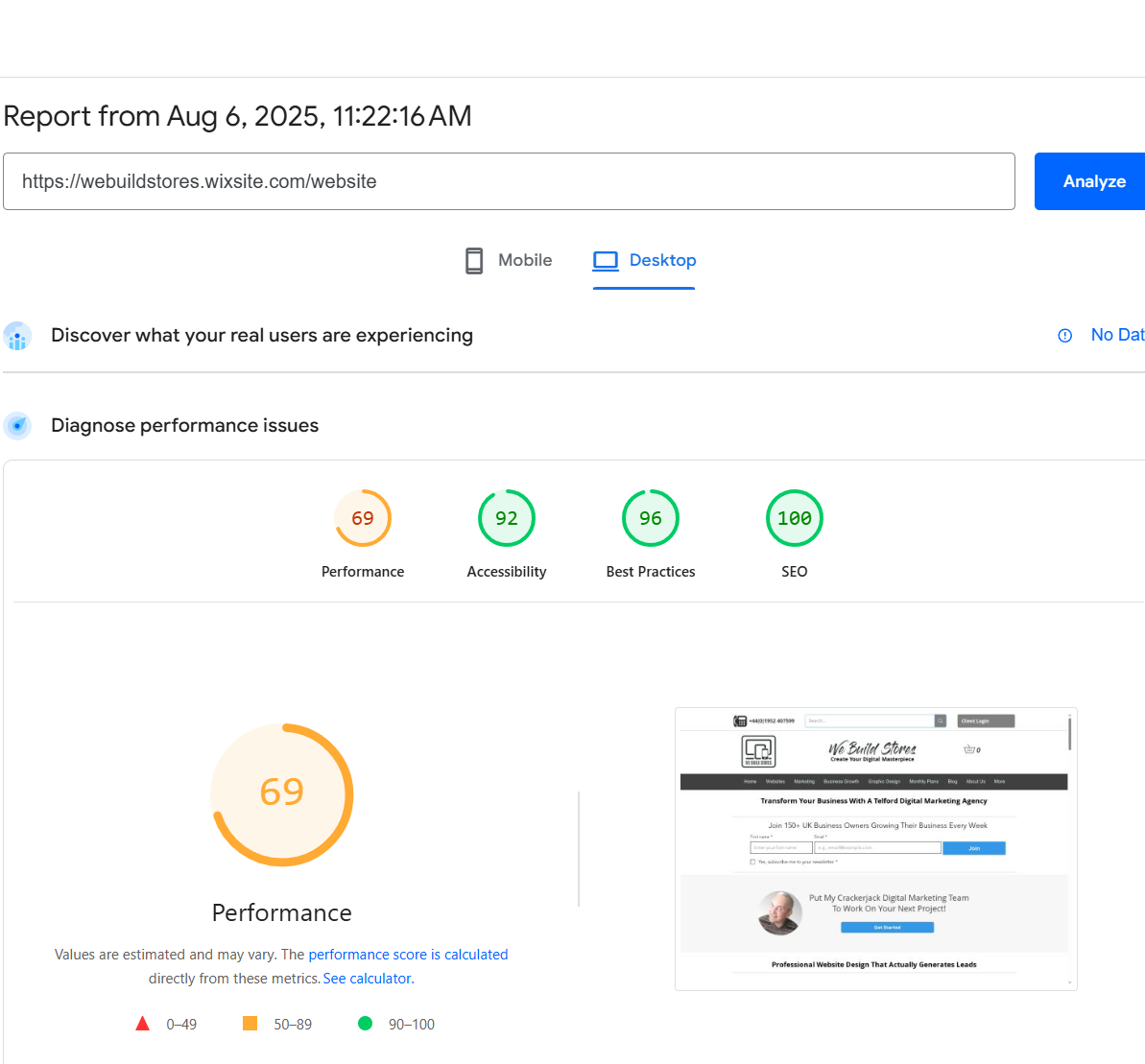
Right, let me start with the numbers that matter:
Warning: Wix Site (Before) - Score: 69/100
Success: Astro Site (After) - Score: 99/100
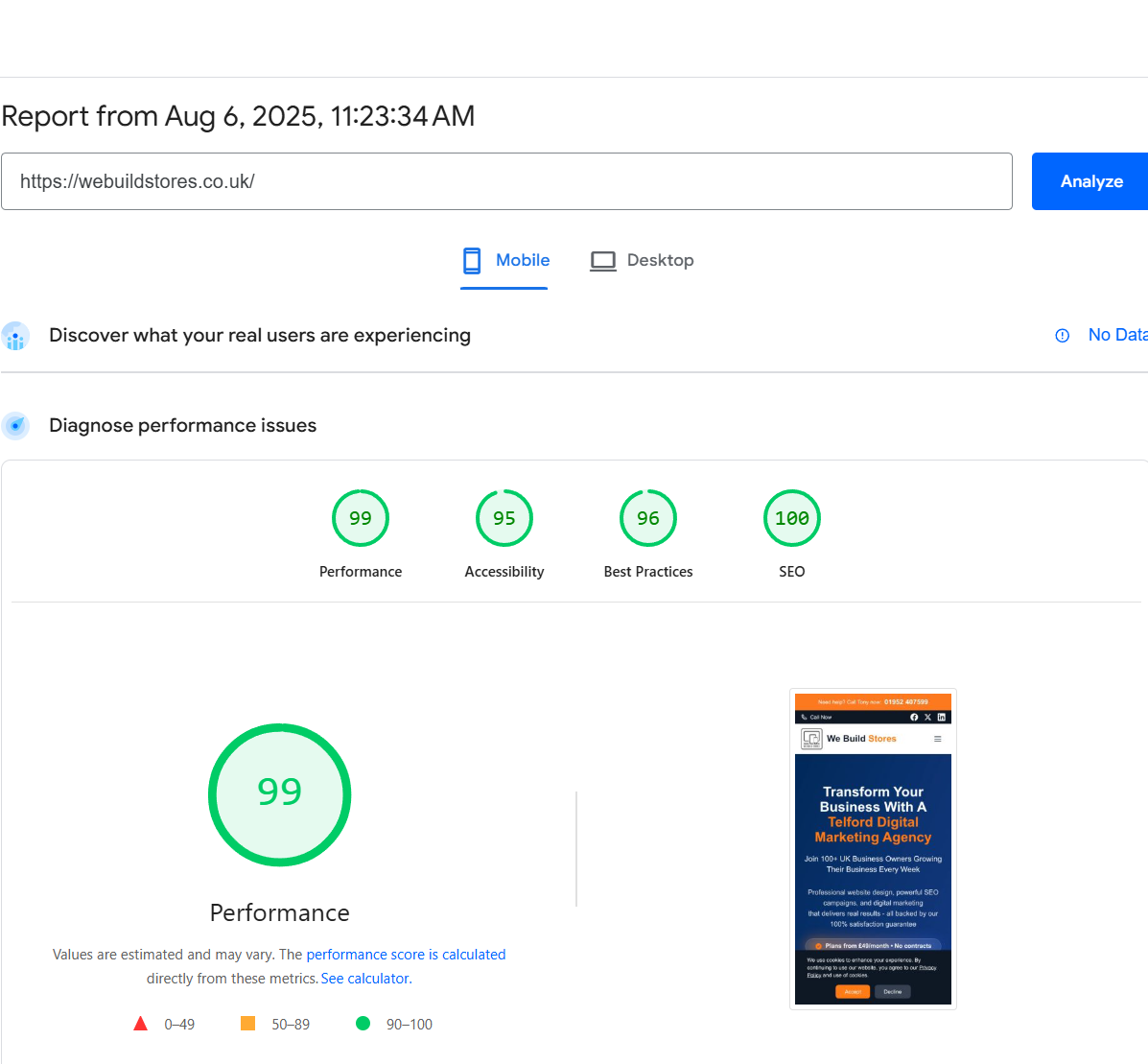
Same content. Same business. The only thing that changed was the technology underneath it.
The Problem: A Platform That Couldn’t Keep Up
August 2025. From my studio in Telford, I’d built a sophisticated Django audit platform with Claude Code. It could analyse websites, generate comprehensive reports, create spreadsheets, produce PDF audits - all automatically. The technology was solid.
But my marketing site was on Wix.
No API access. No way to connect my audit data. Every single audit page would need to be created manually. Copy. Paste. Format. Publish. Repeat.That’s not a business. That’s a sentence.
The £199 WordPress Mistake
So I did what every “serious” developer does. I bought Elementor Pro. £199 for the Expert plan. WordPress has APIs. This would solve everything.
Within thirty minutes, I knew I’d made a mistake.
First came the Elementor madness. Not simple divs or sections - but Inner Sections inside Sections inside Columns inside Containers. Flexbox containers that could be wide, narrow, boxed, full-width, with gaps, without gaps. Like Russian dolls designed by someone who’d never heard of CSS Grid.
Then the save button mystery. Want to save? Don’t look for “Save” - it’s “Publish”. Or “Update”. Or both. Depending on… something.
I looked at my Elementor progress and did the maths. It would take weeks to rebuild my existing Wix site in WordPress. Weeks of my life recreating something that already worked, just on a “more professional” platform.
The Question
I asked Claude Code one simple question: “Is there anything better than WordPress for a modern website?”
The answer: Astro.
My first thought? “Static site generator? No database? That’s going backwards.”
I was wrong.
What Actually Happened
I didn’t plan a migration project. I didn’t write requirements. I sat down with Claude Code and started building.
Session 1: Scraped all my Wix content (Wix doesn’t let you export properly), converted everything to markdown, set up the Astro project with Tailwind CSS.
Session 2: Recreated the main pages, set up the blog, sorted images and broken links.
Session 3: Final tweaks, deployed to Netlify, tested everything worked.
Three sessions. Not six weeks. Not a sprint cycle. Three focused sessions with Claude Code doing the implementation while I made the decisions.
Then I ran PageSpeed Insights.
99/100.
I ran it again, thinking it was broken.
99/100.
My Wix site that took months to perfect? 69. The WordPress site I’d just escaped? I would have been lucky to hit 70.
Why This Worked
The technology I landed on is deliberately boring. That’s the point.
Astro generates plain HTML. No React hydration. No framework JavaScript shipped to the browser. The site loads in 0.3 seconds because there’s nothing to load. When I need interactivity - like a postcode checker or a contact form - Astro’s island architecture lets me add it exactly where it’s needed without bloating everything else.
Tailwind CSS is just utility classes. No CSS-in-JS runtime. No styled-components overhead. Professional layouts built at the speed of thought because I’m not writing custom CSS or debating class names.
Django handles the backend - the audit platform, the API layer, the data processing. It’s been around since 2005, it’s boring, and it’s exactly why it works. Claude Code has seen millions of Django examples. Stable technology means reliable output.
Claude Code reads my entire codebase, understands my patterns, and maintains consistency across the project. I describe what I want. It handles the implementation. Not a chatbot suggesting code snippets - a pair programmer that tests its own work and fixes errors as it goes.
WordPress powers 43% of the web. Here’s what they don’t mention in the marketing:
- Elementor Pro: £199/year
- Advanced Custom Fields Pro: £49/year
- WP Rocket for speed: £59/year
- Wordfence security: £99/year
- Gravity Forms Elite: £259/year
That’s £750+/year on plugins alone. Before hosting. Before maintenance. Before the inevitable conflict when one plugin update breaks three others.
My Astro site? Hosted on Netlify. Plugins: none. Maintenance: none. Cost: negligible.
What The Decision Made Possible
Here’s the part I couldn’t have written when this article first went up. The migration wasn’t just a speed improvement. It was a foundation.
Every client site I build now starts from proven Astro patterns. The templates I created for my own site became the starting point for pay monthly websites that deploy in sessions, not weeks. The real cost of building a website drops when every project inherits months of compound context. The same patterns power trade templates for plumbers, electricians, and builders - an entire business zone that exists because I chose a stack that compounds. Teaching Claude Code to reach for those patterns instead of inventing new ones every time was the breakthrough that made thirty-minute builds possible.
The git history became something I didn’t expect: an SEO forensics tool. When a client’s rankings shift, I can show them the exact change, the exact date, the exact diff. Not a crawl report with maybes - a receipt. WordPress revision history only tracks content. Git tracks everything: templates, schema, routing, build config. That’s a category difference from any WordPress workflow.
And the system gets better at it every session. The context is deeper now than it was in August. The voice guide is tighter. The corrections have accumulated. A rewrite of this very article happens in a single session because the understanding has compounded. The first draft today is better than the fifth draft six months ago.
The Platform Journey
I’ve been through all of them:
- Joomla (2005) - the Madchester years. Looked good, made no sense.
- WordPress (2012) - the tribute band era. Copying everyone else.
- Wix (2018) - the X-Factor phase. All style, no substance.
- Shopify (2020) - learned what actually converts.
- Astro + Claude Code (2025) - the stripped-back acoustic set that works.
Each platform taught me something - because you can’t discover anything if you don’t build anything. The main lesson: complexity kills businesses.
What Migration Actually Looks Like
Moving from WordPress to Astro is simpler than most people expect — I offer this as a complete migration service with full redirect mapping:
- Export your content
- Convert to markdown
- Build with Astro + Tailwind (Claude Code handles the implementation)
- Deploy to Netlify
- Set up proper redirects to keep your SEO rankings
The hard part isn’t the technology. The hard part is admitting that the platform you invested in is holding you back.
Compare that to Wix, where I had to build a scraper tool to liberate my own content because they offer no export. At least WordPress lets you leave with your data.
The £199 Lesson
That £199 I spent on Elementor was the best mistake I ever made. It forced me to ask the right question.
Now I build sites that score 99 on PageSpeed. They deploy in seconds. They cost nothing to run. They connect to my Django platform through proper APIs. And every site I build makes the next one faster - because the patterns and the context compound.
The difference wasn’t learning Astro. The difference was using Claude Code to learn Astro.
If you’re stuck with a slow WordPress site, plugin fatigue, and the creeping sense that there must be a better way - there is. Not a more expensive way. A simpler one.
See what a 99 PageSpeed site looks like ->
Read more about the stack:
- Claude Code for Web Development: The Context Advantage
- Teaching Claude Code Taste
- Complete Guide to Pay Monthly Websites
- Situate Your AI
- Your Website Should Come With a Receipt
Subscribe to the newsletter ->
Built with Claude Code + Astro + Tailwind in Telford, Shropshire. The boring stack that compounds.

Tony Cooper
Founder
Put My Crackerjack Digital Marketing Skills To Work On Your Next Website Design Project!
Get Started